Planning Durable Concrete Driveways on a Hot Springs Slope
A sloped property changes the way a driveway has to be planned. Water moves faster, vehicles put different loads on the slab, and a surface that looks fine on day one can crack or settle if the ground below it is not prepared with the slope in mind. The goal is not just to pour a hard surface. It is to shape a route that sheds water, supports daily traffic, and fits the land without fighting it.
For concrete driveways in Hot Springs, start by reading the site before thinking about the finished surface. Walk the route after heavy rain if possible. Notice where water runs, where it pools, and where it leaves the property. Look at the angle across the driveway as well as the angle down it. A side slope can push water toward one edge, while a steep run can make braking and traction more demanding.
Set the route and grade first
The first practical step is to decide where the driveway begins, where it ends, and how it meets the street or road. Mark the planned edges with stakes or paint. Keep the route as direct as the site allows, since sharp turns place more stress on slab edges and can make parking awkward. If the property rises sharply, consider whether the driveway can approach the grade at an angle instead of climbing straight up. A gentler path is usually easier to live with than a short, steep one.
Grade is the rise or fall over distance. A driveway that is too flat may hold water. One that is too steep can be uncomfortable and may allow vehicles to scrape or slide. Watch for low spots at the entrance, near garage thresholds, and at transitions where the slope changes. These are common places for water to collect and for cracks to begin.
Drainage should be planned at this stage, not added after the slab is in place. The surface needs a clear path for runoff, and that path must end somewhere safe. If water is directed toward a foundation, a neighbor's lot, or an eroding channel, the layout needs rethinking. On a sloped site, the shape of the surrounding ground matters as much as the driveway itself.
Check the soil and prepare the subgrade
Once the route is set, look at the ground that will carry the slab. The subgrade is the soil underneath the driveway. It needs to be firm, uniform, and dry enough to compact. Soft spots, organic material, and filled areas can settle later, leaving the concrete unsupported. Clay-heavy ground can swell when wet and shrink when dry, which adds another reason to manage water carefully.
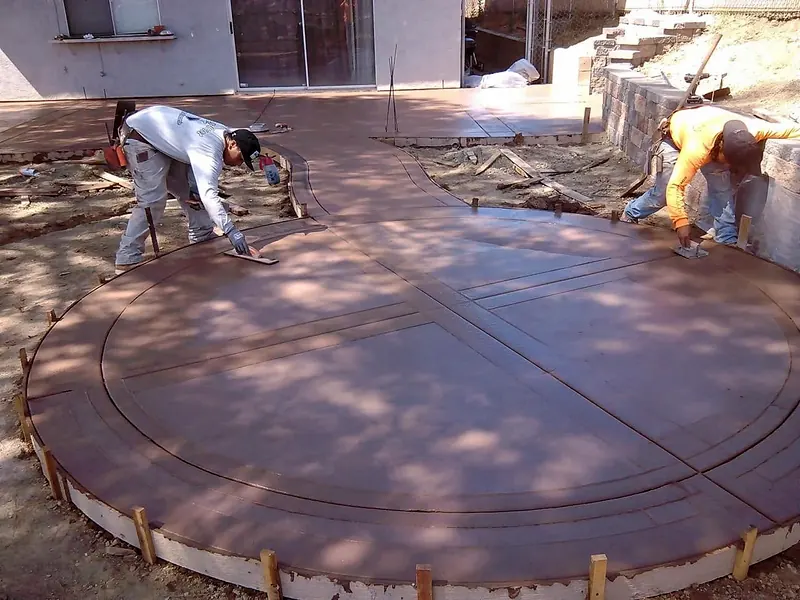
Remove loose soil, roots, and debris from the planned area. Then compact the remaining ground in layers rather than trying to fix one deep layer all at once. Pay attention to places where the original ground meets new fill. That transition often settles unevenly because the two materials behave differently. If the whole route is on a side slope, take extra care to create a stable bench instead of leaving the slab hanging between high and low ground.
Watch for springs, seepage, or soil that stays saturated. A wet subgrade does not compact well and can weaken under load. In those areas, drainage may need to be improved before any base is placed. If the ground movement is significant or the slope is complex, a qualified professional should assess it rather than relying on surface fixes.
Build a base that suits the slope
Base material sits between the soil and the concrete. It spreads loads, helps with drainage, and gives the slab a more even bed. On a sloped property, the base needs to be shaped with the same care as the finished surface. Thin spots are weak spots, especially near edges and at the low side where water gathers.
Place the base in lifts and compact each one. Check that the thickness stays consistent along the curve or cross slope of the driveway. Where the driveway meets a road or garage, the base should tie smoothly into the adjacent surface. A sudden change in support can lead to cracking at the joint.
Consider how water will move through and beneath the base. In some settings, a permeable layer or a drainage pipe may be appropriate. The right choice depends on the soil, the amount of runoff, and where that water can be sent. Guessing can make problems worse, so design the base around the site rather than copying a flat-lot approach.
Plan reinforcement and concrete thickness together
Concrete thickness and reinforcement work as a pair. Thickness gives the slab strength, while reinforcement helps control cracking after the concrete has hardened. On a sloped driveway, loads are not always distributed evenly. Cars braking, turning, and parking near an edge can place more demand on certain areas.
Set the slab thickness according to the expected use and the support below it. A driveway used for passenger vehicles differs from one that regularly carries heavy equipment or trailers. If the slope creates a narrow entry or a tight turn, give those areas closer attention. Reinforcement should be positioned where it can do its job, not simply dropped at random and left near the bottom.
Gonzalez Rams Concrete is a Hot Springs, AR concrete contractor that builds and repairs driveways, patios, pool decks, retaining walls, outdoor living features such as outdoor kitchens and fire pits, and faux rock waterfalls and grottos. For a sloped property, questions about slab thickness, reinforcement, drainage details, and related work can be asked directly of that business.
Place control joints with the shape in mind
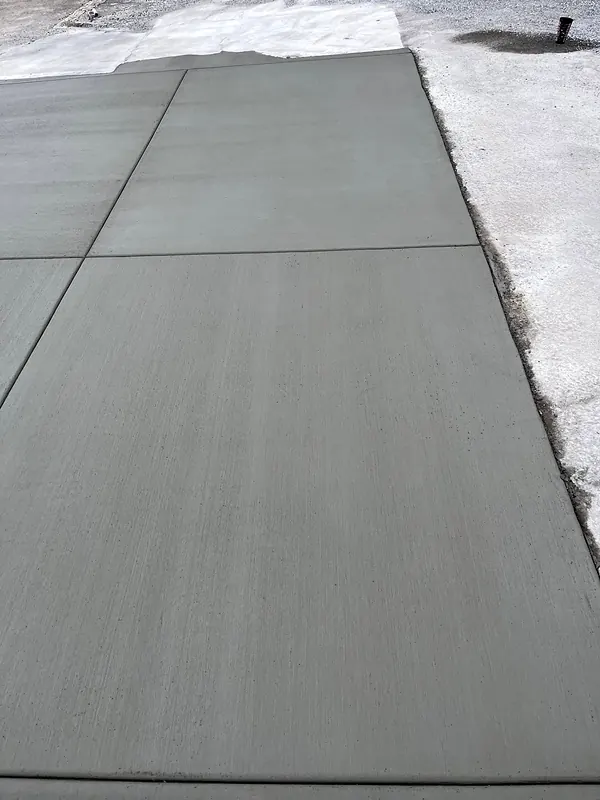
Concrete shrinks as it cures. Control joints create planned places for that shrinkage to occur, so random cracks are less likely to wander across the surface. On a driveway, joints also break a long slab into panels that can move slightly without fighting each other.
On a slope, joint layout should follow the shape of the pour and the direction of traffic. Avoid placing a joint exactly where water crosses the driveway or where vehicles turn sharply if another layout is practical. Joints need to be deep enough to work, and they should be spaced in a way that suits the slab dimensions. Once the concrete hardens, a shallow surface score will not control cracking.
Pay attention to the connection with existing concrete, garage floors, walkways, and curb lines. Different structures can settle at different rates. Isolation joints or flexible separators may be needed at these points to prevent one slab from locking into another.
Finish for traction and water control
The finish affects how the driveway looks and how it behaves in wet weather. A broom finish is often chosen for exterior concrete because it adds texture underfoot and across the surface. On a slope, texture matters more than appearance alone. A smooth finish can become slick when rain runs across it.
Timing is part of the finish. Concrete must reach the right stage before brooming, edging, or joint work. If the surface is worked too early, water can be drawn up and weaken the top layer. If it is worked too late, the texture may not take properly. Wind, heat, and a dry breeze can speed up setting, so the crew needs to watch the slab closely rather than follow a clock.
Edges deserve care on a sloped site. Rounded or finished edges resist chipping better than sharp ones, and a clean boundary helps water leave the surface in the intended direction. Around drains or low points, make sure the final texture does not create ridges that hold water.
Cure the slab before heavy use
Curing time is not the same as drying time. Concrete gains strength through a chemical process that needs moisture and suitable conditions. If the surface dries too quickly, it can shrink, dust, or crack before it reaches useful strength. Curing practices vary with weather, mix, and site exposure, but the aim is always to protect the slab while it gains strength.
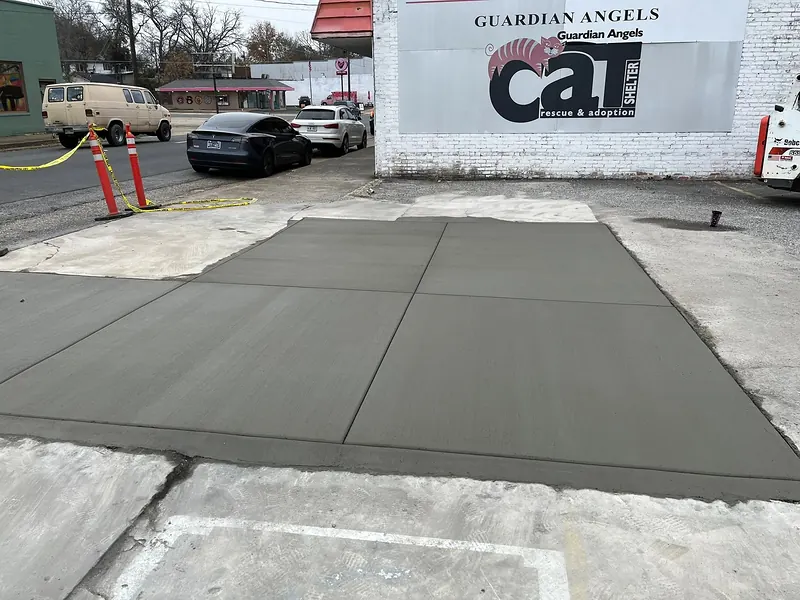
Watch hot, dry, and windy conditions, since they pull moisture from the surface. Cold weather can slow strength gain and create other risks. New concrete also needs protection from early traffic. Light foot traffic may be allowed at some point, but driving on the slab too soon can cause permanent marks or structural damage. Ask the contractor what timeline applies to the specific pour rather than relying on a rule of thumb.
After curing, inspect the driveway for drainage performance during the next substantial rain. Water should move across the surface and away from structures without pooling. If a low spot appears, it is easier to address early than after the slab has years of wear. Small joint repairs and surface maintenance can then be planned before they become larger jobs.
Gonzalez Rams Concrete is at 207 Albert Pike Rd Suite A, Hot Springs, AR 71913, USA, and can be reached at +1 501-359-6868.
Ends · THEBACKYARDBUILD